Remembering, Celebrating, and Respecting Día de Muertos
Living in Mexico offers us the opportunity to experience traditions that invite us to see the world a little differently. One of the most beautiful is Día de Muertos, or Day of the Dead, a celebration of remembrance, family, and the enduring connection between the living and those who have passed away.
At first glance, the colourful flowers, decorated skulls, candles, music, and elaborate altars might look like a festival. But beneath the vibrant colours lies something deeply meaningful: the belief that our loved ones are remembered, welcomed, and celebrated through the stories we share, the foods they enjoyed, and the traditions passed down through generations.
Did you know that the remembrance can begin well before November 1 and 2?
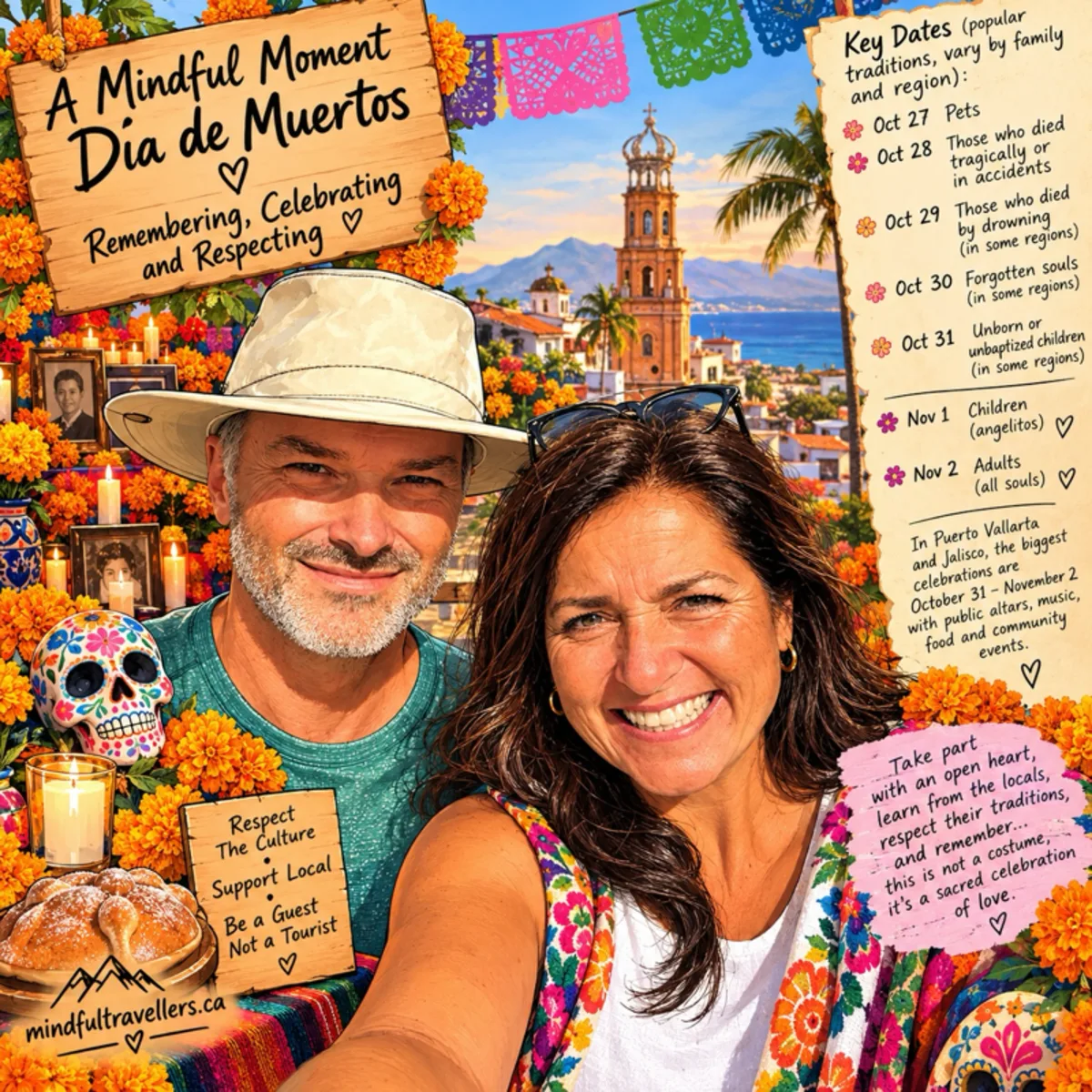
Although traditions differ from one region and family to another, a popular calendar observed in some parts of Mexico recognizes different groups of departed souls on different days:
- October 27: Beloved pets who have passed away are remembered.
- October 28: Those who died tragically or in accidents may be honoured.
- October 29: In some traditions, those who died by drowning are remembered.
- October 30: A day sometimes associated with forgotten souls or those without anyone to remember them.
- October 31: In some communities, remembrance is offered to unborn children or children who died without baptism.
- November 1 — Día de Todos los Santos: Often dedicated to children who have passed away, affectionately called angelitos, or little angels.
- November 2 — Día de los Fieles Difuntos: Commonly dedicated to deceased adults, with families gathering to remember loved ones.
These dates are not universal rules. Customs vary across Mexico, and many families follow their own traditions. The heart of the celebration is remembrance, rather than following a single calendar.
So, how can we participate respectfully as guests in Mexico?
We can begin by learning from the people who live these traditions. Visit public celebrations, admire the ofrendas (offerings and altars), listen to the stories behind the decorations, and ask questions when the moment feels appropriate. Support local artisans, enjoy traditional foods such as pan de muerto, and attend community events that welcome visitors.
If invited to a family celebration, accept the invitation with gratitude and follow your hosts’ lead. Remember that an altar may be a deeply personal expression of love and grief, not simply a beautiful backdrop for a photograph. Always ask permission before photographing people, private altars, or cemetery ceremonies, and respect any areas or rituals that are not open to visitors.
We can appreciate the beautiful face painting, art, and symbolism associated with Día de Muertos without treating them as costumes or props stripped of their meaning. Rather than assuming every tradition is ours to recreate, we can listen, learn, and allow Mexican families and communities to guide our experience.
For us, living part of the year in Puerto Vallarta means being welcomed into a place that feels like home. Being part of a community is about more than enjoying its sunshine, food, and lifestyle. It is also about understanding its history, respecting its customs, and appreciating the people who keep those traditions alive.
This week’s mindful moment: Approach a tradition that is not your own with an open heart and a curious mind. You don’t have to take part in every ritual to appreciate its beauty. Sometimes the most meaningful way to celebrate is to show up respectfully, listen to the stories, support the community, and leave with a deeper understanding than you arrived with.
After all, mindfulness isn’t just about being present in our own lives. It’s also about being thoughtful guests in the lives, cultures, and communities we are fortunate enough to experience.
Yours respectively,
Ms.Mindful Traveller