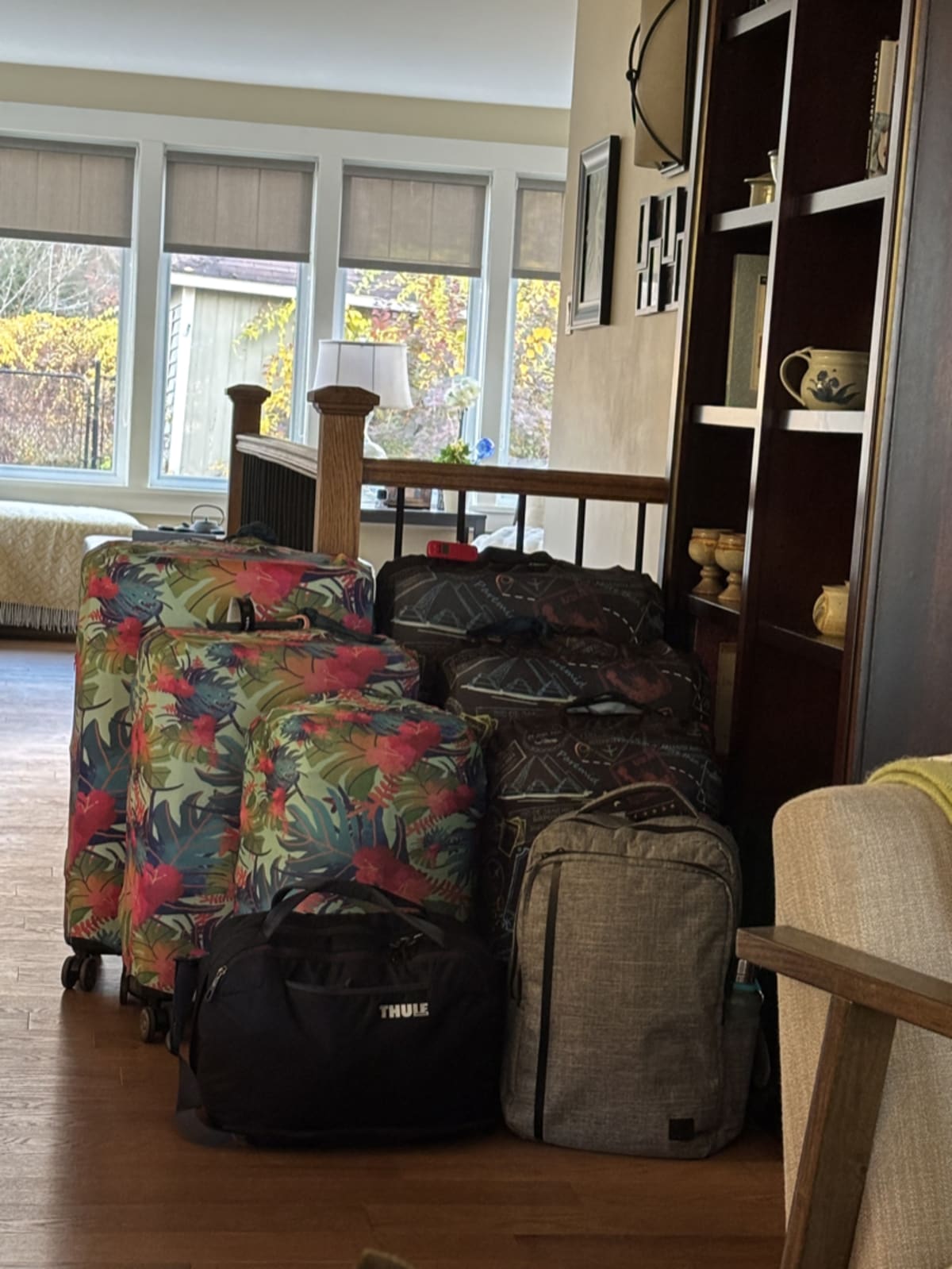
The Essential Travel Packing Guide: What's Always in Our Bags
One of the most common questions we get is “What should I pack?” After years of travel, we’ve refined our packing list to include items that make our journeys smoother, healthier, and more comfortable. Here’s our comprehensive guide to what we always carry with us.
The Essentials Checklist
Essential Documents
- Passport (valid 6+ months)
- Visas (if required)
- Driver’s license
- Travel insurance documents
- Flight confirmations
- Accommodation confirmations
- Emergency contact list
- Copies of all documents (digital & physical)
- International driving permit (if planning to drive abroad)
Health & Medical
- Extra batteries for medical devices
- Prescription medications (in original containers)
- Doctor’s note for medical supplies
- Basic first aid kit
- Pain relievers
- Anti-diarrheal medication
- Bandages and antiseptic wipes
- Insect repellent
- Sunscreen (reef-safe preferred)
- Blister prevention, toe sleeves (Amazon)
- Water purification tablets or filter bottle (for destinations with unsafe tap water)
Electronics & Tech
- Phone & charger
- Travel router (Amazon)
- Universal power adapter (Amazon)
- Portable charger/power bank (Amazon)
- VPN subscription for secure public Wi-Fi
- Laptop/tablet & charger
- Camera & charger
- Headphones/earbuds
- Small surge protector
- Bluetooth speaker (optional)
Clothing
- Comfortable walking shoes
- Sandals/flip-flops
- Light jacket or shawl
- Weather-appropriate clothing
- Underwear & socks
- Sleepwear
- Swimsuit (if applicable)
- Hat/cap
- Rain jacket/umbrella
Toiletries
- Toothbrush & toothpaste
- Deodorant
- Shampoo & conditioner
- Soap/body wash
- Razor & shaving cream
- Hairbrush/comb
- Feminine hygiene products
- Contact lens solution/case
- Glasses/contacts
- Lip balm
- Travel-sized containers (TSA 3-1-1 compliant for carry-on)
Comfort Items
- Reusable water bottle
- Healthy snacks (nuts, dried fruits)
- Eye mask
- Earplugs
- Neck pillow
- Compression socks (for long flights)
- Quick-dry towel
- Tissues/wet wipes
Organization
- Clear toiletry bags (TSA-friendly)
- Packing cubes (Amazon)
- Dry bags for electronics
- Small day bag/backpack (Amazon)
- Zip-lock bags
- Laundry bag
- RFID-blocking wallet
Money & Security
- Credit/debit cards
- Cash (local currency)
- Emergency cash stash
- TSA-approved locks
- Money belt/hidden wallet
- Portable safe (optional)
Destination-Specific
- Beach: Beach towel, snorkel gear, waterproof phone case
- City: Comfortable city shoes, umbrella, city map
- Adventure: Hiking boots, backpack, first aid kit
- Cold weather: Insulated jacket, gloves, scarf, thermal layers
Pre-Trip Prep
- Check medication expiration dates
- Verify travel insurance coverage
- Research local medical facilities
- Download offline maps
- Install travel apps (translation, maps, currency converter, airline)
- Inform bank of travel plans
- Set up emergency contacts
- Research local customs
- Learn basic phrases in local language
On-the-Go Essentials
- Hand sanitizer
- Pen
- Notebook/journal
- Plastic bags (for laundry/wet items)
- Reusable shopping bag
- Portable laundry detergent sheets
Carry-On vs. Checked Bag
Not everything belongs in the same bag. Here’s what goes where:
Always in Carry-On
- Prescription medications (in original containers)
- Medical devices and extra batteries
- Power banks and spare batteries (airline regulations require these in carry-on)
- Passport, visas, and travel documents
- Electronics (laptop, tablet, camera)
- Jewelry and valuables
- One change of clothes in case checked luggage is delayed
Can Go in Checked Bag
- Larger toiletries (over 100ml/3.4oz)
- Bulky clothing items
- Non-essential electronics (Bluetooth speakers, etc.)
- Extra shoes
- Travel-sized items you don’t need during transit
TSA Liquid Rules (for carry-on)
- Liquids, gels, and aerosols must be 100ml/3.4oz or less
- All liquids must fit in a single clear, quart-sized zip-top bag
- One bag per passenger
- Exceptions: medications, baby formula, and breast milk
Pro Tips for Packing
1. Medication Management
- Pack medications in carry-on luggage
- Bring extra supplies in case of delays
- Keep a list of generic names for medications
- Research local pharmacy options at destination
2. Smart Organization
- Use packing cubes to separate clothing
- Keep medical supplies in clear bags for security
- Pack a small “emergency kit” in your day bag
- Label everything in multiple languages if needed
3. Climate Considerations
- Research weather patterns
- Pack layers rather than bulky items
- Include rain protection
- Consider humidity impact on medical supplies
4. Security Measures
- Use TSA-approved locks
- Keep valuable items in carry-on
- Make copies of important documents
- Use RFID-blocking wallet for cards
Special Considerations
For Long-Term Travel
- Prescription plans for extended periods
- International pharmacy locations research
- Medical supply shipping options
- Local medical facility information
Remember, this list is a starting point, customize it based on your specific needs and destination. We’ll be sharing more detailed guides about specific aspects of this list in future posts, including how to pack for different climates and how to manage medical supplies in various travel situations.
Affiliate Disclosure: This post contains affiliate links. If you purchase through these links, we may earn a commission at no extra cost to you. We only recommend products we have used or thoroughly researched.
What’s your must-have travel item? Share with us in the comments below!